09/30/2026


Aftercare in the first weeks is wound care: keep the tattoo clean, apply a thin layer of ointment, and protect it from soaking, sun and friction. The first 48 hours matter most, because the tattoo is still releasing plasma and excess ink, and how you look after it then largely decides what the scab will be like. The skin fully renews in 3-6 weeks, but people make the most mistakes in the very first week.
If your first tattoo is still ahead of you, start with what to know before your first appointment.
That depends on what you've got on it. Two very different dressings are used on tattoos, which is why online you'll find both "after two hours" and "after five days". Both can be right, just for different dressings.
Regular clear film just protects the tattoo until you get home. The skin can't breathe under it, so it comes off after a few hours.
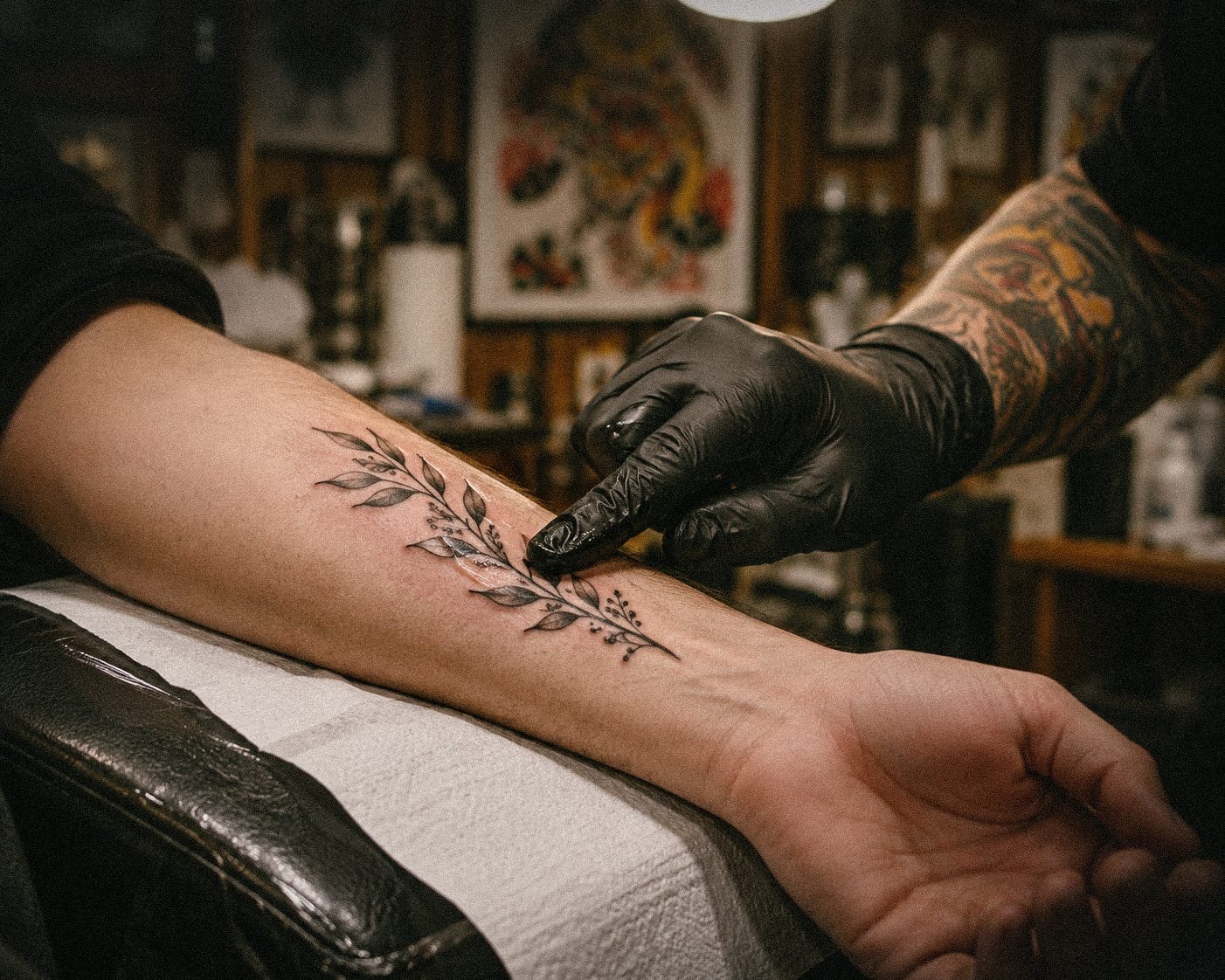
Self-adhesive breathable film sticks to the skin like a big plaster and can stay on for several days. In the first 24 hours fluid with traces of ink collects under it. It looks alarming, but that's how it should be. If the fluid starts leaking out or the edge of the film lifts, the film isn't protecting anything any more. Then take it off, wash the tattoo and carry on without film.
Peel the film off slowly and along the skin, not away from it. In a warm shower the adhesive lets go more easily.
Wash your hands first. Then wash the tattoo with your fingers, using warm water and antibacterial soap. No sponge, no cloth. A large tattoo can go straight in the shower. For the first weeks, wash it at least twice a day.
Pat it dry with a paper towel or use a hairdryer on the cool setting. Put the cotton towel away for now. Fibres stay on fresh skin, along with whatever has built up in the towel since its last wash.
In the first days a tattoo weeps plasma along with excess ink. That's why washing matters so much: dried plasma forms a thick scab, and a thick scab cracks and flakes off in pieces.
On clean, dry skin, apply Bepanthen 5% ointment or another product made for tattoo aftercare, 3-5 times a day. That's what we recommend at our studio too.
The amount matters more than the brand. The layer should be so thin that after a minute the skin looks only slightly shiny, not white or wet. Too thick a layer soaks the scab, it goes soft and pale, and ink can come away with it. Too little, and the skin tightens and starts to crack.
Don't use pure petroleum jelly while it heals. It forms a thick layer that keeps the air out. Coconut and other kitchen oils aren't meant for an open wound, so use only a product made for tattoos. Keep using the ointment after the scab has come off. At that point a regular moisturising cream is fine too, until the skin has fully healed.
The skin around the tattoo is red, warm, slightly swollen and stings a bit like a graze. Plasma and ink seep out, and the lines may look a little blurry. All of this is normal and gradually settles down.
A thin scab forms over the tattoo, and the itching starts. No scratching, not even a little. Some of the ink is in the scab, and if you pull it off, part of the tattoo can go with it. The same thin layer of ointment helps with the itch. If it won't leave you alone, press a cool, clean palm against the skin for a moment.
The scab peels and flakes off like skin after a sunburn. On large pieces with a lot of ink this can take longer. Let it come off by itself, even if a corner is already hanging loose.
The scab is gone, but the tattoo looks dull, almost milky, and the skin is shiny. This is when many people panic that the ink has faded. It hasn't. A new layer of skin is forming over it, and until that layer has settled, the tattoo looks as if it's behind frosted glass. This can last until weeks 3-6, when the skin has fully renewed, and it goes away on its own.
The skin surface is smooth again, the lines are sharp and the colour is clear again. Only now can you honestly judge how the tattoo has healed.
For the first two weeks, no sauna, no lying in the bath, no swimming in a pool, the sea or a lake. Showering is fine. If the tattoo soaks in water for long, the scab softens and comes loose, and pool chlorine or lake bacteria do an open wound no good.
No sunbathing and no tanning beds. Fresh skin burns much faster. A burn makes healing take longer, and the ink can fade. In the sun, cover the tattoo with clothing. Sunscreen isn't meant for an open wound; start using it only once the tattoo has healed. After that, though, put it on every time you'll be in the sun for a while. The sun is what fades tattoos most over the years.
During the first week, when you train, make sure equipment or a bag strap doesn't rub the scab. Wash the tattoo after a workout so sweat doesn't dry on it.
Don't shave the tattooed area until the skin has healed. The blade scrapes off the scab and irritates skin that is still healing.
For the first few days, wear loose, clean cotton clothes that don't rub the tattoo or cling to it. Plasma sticks to fabric, and when you take your clothes off, the scab comes off with them. If something has stuck anyway, don't pull. Wet the fabric with water and wait until it lets go by itself.
For the first few nights, try not to sleep on the tattoo, and sleep on clean bedding you don't mind ruining, since ink may stain it. If a belt, bra or bag strap presses on the tattoo, loosen it for the first few days or carry the bag on the other shoulder. Friction rubs the scab off just like fingernails do.
Redness and warm skin in the first days are normal. If after the third day the redness starts to spread instead of fading, the skin gets hotter and the swelling grows, see a doctor. If you see pus, red streaks running away from the tattoo, or have a fever, don't wait until morning. See a doctor the same day.
You should also see a doctor if a very itchy rash or raised areas appear only where one colour is, most often red. It may be an allergic reaction to the pigment, and it can show up weeks or even months later, long after the tattoo has healed. That's for a doctor to judge, not a tattoo artist.
If something looks odd but isn't on this list, write or call us.
Once the tattoo has healed, after 3-6 weeks, book a time and show it to the artist who did it. If the ink hasn't taken somewhere, we'll arrange a touch-up. A touch-up, if needed, is included in the price of the tattoo.
The dull stage doesn't need a touch-up. What needs one is pale patches or broken lines that are still there after the skin has fully renewed. So come in to show it not a week after the session, but once it has healed.
You'll find a short aftercare reminder in our frequently asked questions.



 English